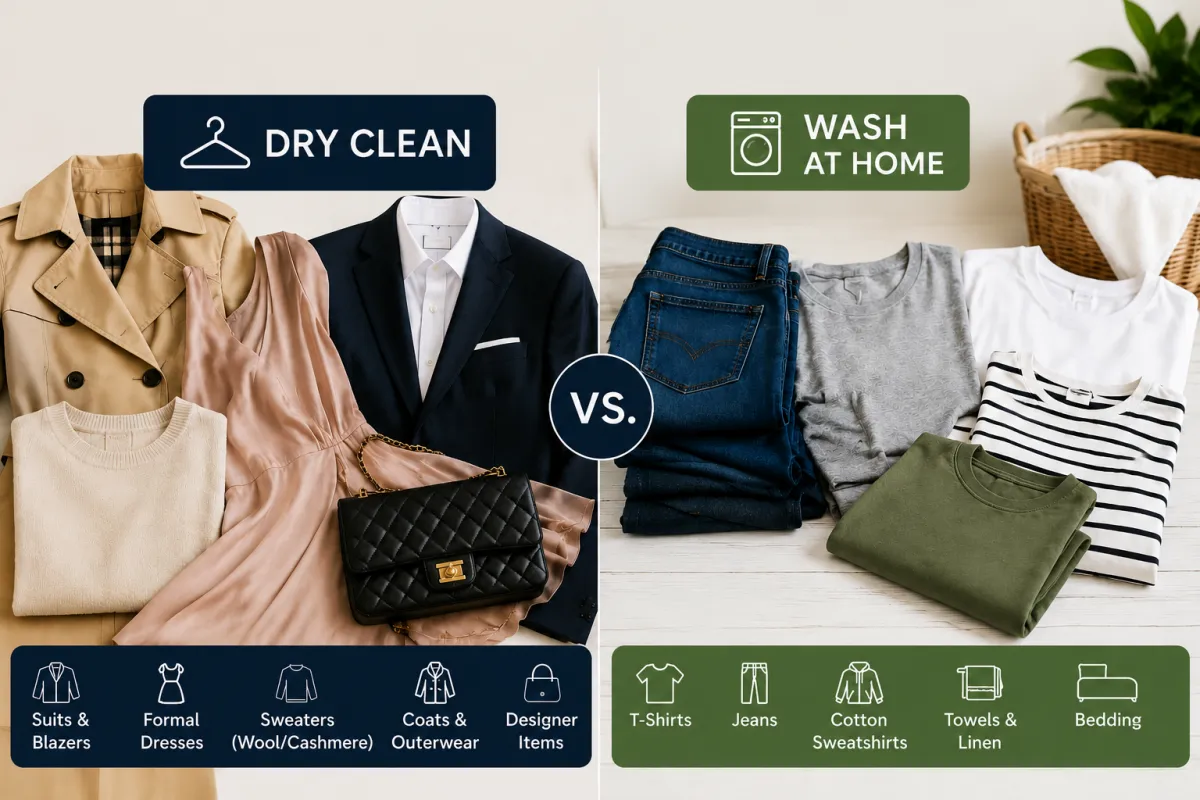
What Items Should You Dry Clean vs. Wash at Home
What Items Should You Dry Clean vs. Wash at Home?
Standing in front of your laundry basket wondering what really needs dry cleaning
and what you can safely wash at home is a common dilemma. Understanding the
difference can save you money, preserve your clothes, and prevent heartbreaking
laundry disasters.
Start With the Label — But Read It Smartly
Care labels are your first guide. However, there's an important difference between
"Dry Clean" and "Dry Clean Only." The word only is a strong warning that
the fabric, construction, or trimmings are likely to be damaged in a home wash. A
simple "Dry Clean" label often means the manufacturer recommends the gentlest
option, but many people successfully hand-wash those items with care.
Pro Tip: When in doubt, test a hidden area with cool water and a tiny bit of mild detergent to see if the color bleeds or the fabric changes texture.
Items You Should Almost Always Dry Clean
Some garments are best left to the professionals because of their fabric, structure, or cost to replace:
Tailored suits and blazers — The inner linings and canvassing can warp or
bubble in a washing machine, ruining the shape and drape.
Structured coats and jackets — Wool overcoats, trench coats with linings, and formal outerwear often need pressing equipment and techniques you won't have at home.
Silk garments labeled "Dry Clean Only" — Especially bias-cut dresses, silk
suits, and anything with complex construction or beading.
Formalwear and evening gowns — Beads, sequins, lace overlays, and boning are easily damaged in a regular wash cycle.
Delicate fabrics like velvet and some satins — These can crush, lose sheen, or develop water spots if washed at home.
For these pieces, dry cleaning protects not just the fabric, but also the investment you've made in them. You may not need to clean them after every wear — often a gentle airing out and spot treatment between professional cleanings is enough.
When You Can Safely Wash "Dry Clean" Items at Home
Many everyday clothes with "Dry Clean" labels actually handle gentle home care well, especially if they're made from sturdy fibers. Consider washing at home when:
The fabric is cotton, linen, polyester, or a blend without heavy structure or lining. Lightweight dresses, skirts, and blouses often fall into this category.
The garment is unlined and unstructured, such as simple tops, casual trousers, or summer dresses.
You're willing to hand wash in cold water with a gentle detergent and lay flat or hang to dry.
Hand-washing reduces agitation and heat — two major culprits behind shrinking, stretching, and fading. Always reshape garments while damp and avoid wringing, which can twist fibers and distort seams.
Fabrics That Demand Extra Caution
Some materials sit in a gray area between "always dry clean" and "wash anything." Knowing how they behave helps you choose wisely:
Wool and cashmere — Sweaters, scarves, and knits can often be hand washed in cold water with a wool-safe detergent, then dried flat. Tailored wool garments, however, should go to the dry cleaner.
Silk — Many silk blouses and scarves wash well by hand, but darker or strongly colored silks may bleed. Always test first and avoid soaking for long periods.
Rayon and viscose — These fibers can shrink, stretch, or become stiff after washing. If the piece is special or expensive, err on the side of dry cleaning.
What You Should Almost Always Wash at Home
On the other end of the spectrum, some items are made for regular home laundering
and rarely benefit from dry cleaning:
Everyday T-shirts, jeans, and casual wear made from cotton, denim, or durable blends.
Activewear and athleisure with stretch fibers that can break down under dry cleaning solvents but thrive with cool machine washes.
Underwear, socks, and most sleepwear, which need frequent washing in water for hygiene.
Use the gentle or delicate cycle for lighter fabrics, choose cool or warm (not
hot) water, and avoid overloading the machine so clothes can move freely and rinse
thoroughly.
Balancing Cost, Convenience, and Clothing Lifespan
Deciding whether to dry clean or wash at home comes down to a few key questions:
1. How expensive or sentimental is the item? If replacement would be painful, professional care is often worth the cost.
2. What is the fabric and construction like? The more delicate, structured, or embellished, the more it leans toward dry cleaning.
3. How often do you wear it? Everyday pieces should be easy and affordable to wash regularly at home.
By learning which items truly need dry cleaning and which can handle a gentle wash, you can stretch your clothing budget, reduce wear and tear, and keep your wardrobe looking polished. A thoughtful approach to care pays off every time you reach for a favorite piece and find it still looks and feels like new.
From dry cleaning to laundry, Star Cleaners handles the garments that matter most to you — whether that's a work staple, a cherished formal wear piece, or your everyday favorites. Drop them off or take advantage of our pickup and delivery service.
Simple. Dependable. Done right.